
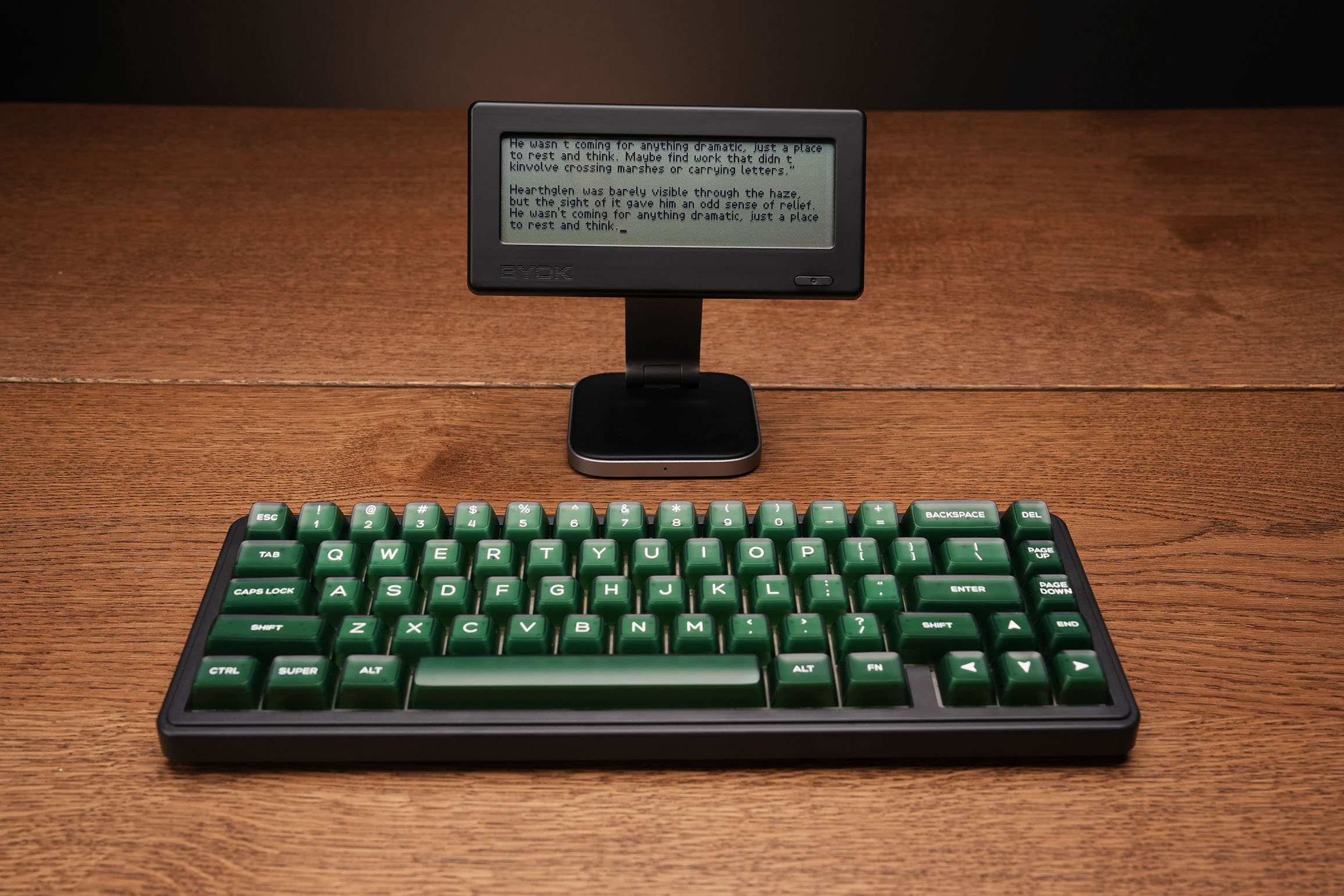
Quick Answer: What Is a Digital Typewriter?
A digital typewriter is a focused writing device that keeps the single-purpose feel of a traditional typewriter, but stores your work digitally so you can edit, sync, export, or continue writing elsewhere.
The idea is simple: give writers a quieter place to draft without bringing back all the inconveniences of paper, ink, correction tape, and retyping.
A traditional typewriter gives you focus and ritual. A laptop gives you flexibility and power. A digital typewriter sits between those two worlds by giving you a dedicated drafting tool with a more practical modern workflow.
Why Writers Are Turning to Digital Typewriters
Typewriters had many things right. This video explores the pull many writers feel toward simpler, quieter tools — and how digital typewriters try to bring that feeling into a modern writing workflow.
Who Is a Digital Typewriter For?
A digital typewriter is for writers who want to recapture the spirit of traditional typewriters and find a more focused way to write without having to commit to a workflow from 70 years ago.
It may be a good fit for:
- Novelists who want a dedicated first-draft space
- Journalers who want separation from phones and laptops
- Writers who get pulled into tabs, notifications, and apps
- Students or professionals who draft better away from a full computer
- Anyone who likes the idea of a typewriter but still needs digital files
- Writers who want a portable writing device that feels separate from ordinary work
A digital typewriter is not usually meant to replace a full computer. It is better understood as a dedicated drafting tool. You write in a quieter environment, then move your work into a larger editing or publishing workflow when needed.
Why Writers Are Looking for Digital Typewriters Again
Many writers are not looking for more software. They are looking for less noise.
Modern writing often happens on the same devices we use for email, social media, research, shopping, work, entertainment, and messaging. That creates a constant temptation to leave the draft.
The pull is not only about other apps. Modern writing software is incredibly powerful, and that power can be its own distraction. There are endless ways to set things up, reformat, and endlessly tweak a sentence. For a writer just trying to get a first draft down, the temptation to keep going back and perfecting each paragraph can be as much of a hindrance as any notification.
A digital typewriter appeals to writers because it creates a boundary. It gives writing its own physical place again.
Writers are drawn to digital typewriters for a few common reasons:
- Focused drafting
- No browser tabs
- No notifications
- Physical keyboard feel
- A clear writing ritual
- Separation from laptop work
- A tool that feels like writing, not general computing
- A more intentional first-draft environment
The appeal is not just nostalgia. It is about protecting the mental space needed to write.
What Traditional Typewriters Got Right
Traditional typewriters understood something important about writing: the tool had one job.
A typewriter gave writers a physical, focused, single-purpose environment. You sat down, put paper in the machine, and wrote.
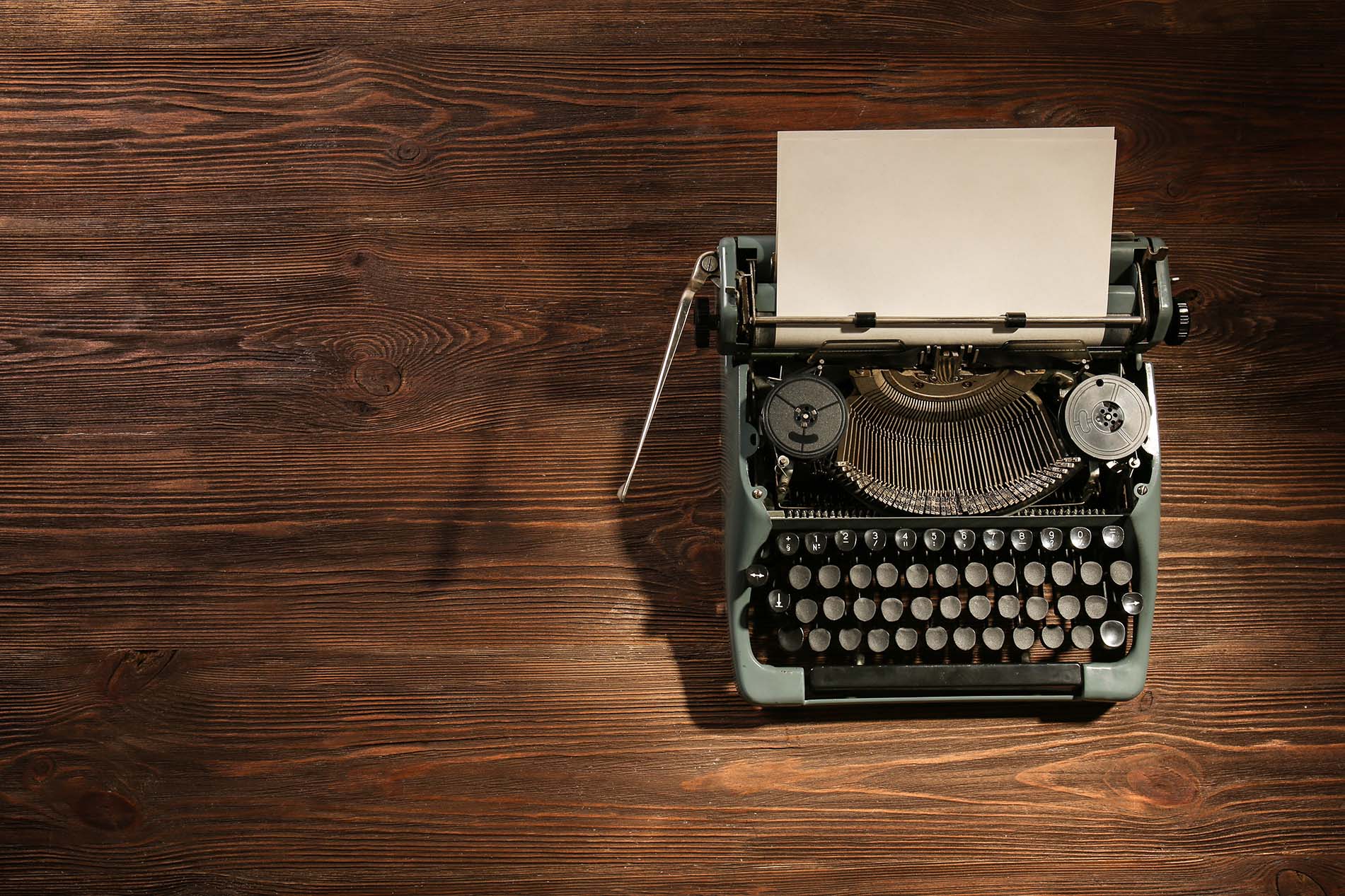
What typewriters got right:
- They were single-purpose tools
- They created a strong writing ritual
- They gave writing a physical presence
- They encouraged forward motion
- They made the act of writing feel separate from other work
For many writers, that separation is the real magic. A typewriter is not just a machine. It is a boundary.
Why Traditional Typewriters Don't Fit Modern Writing
Traditional typewriters are inspiring, but they were designed for a different era and they do not adapt well to the way we write today.
They create focus, but they make everything after the first draft harder. There is a real tension here: many writers genuinely want to use a typewriter and find that they simply cannot, because of how it fits into a modern workflow.
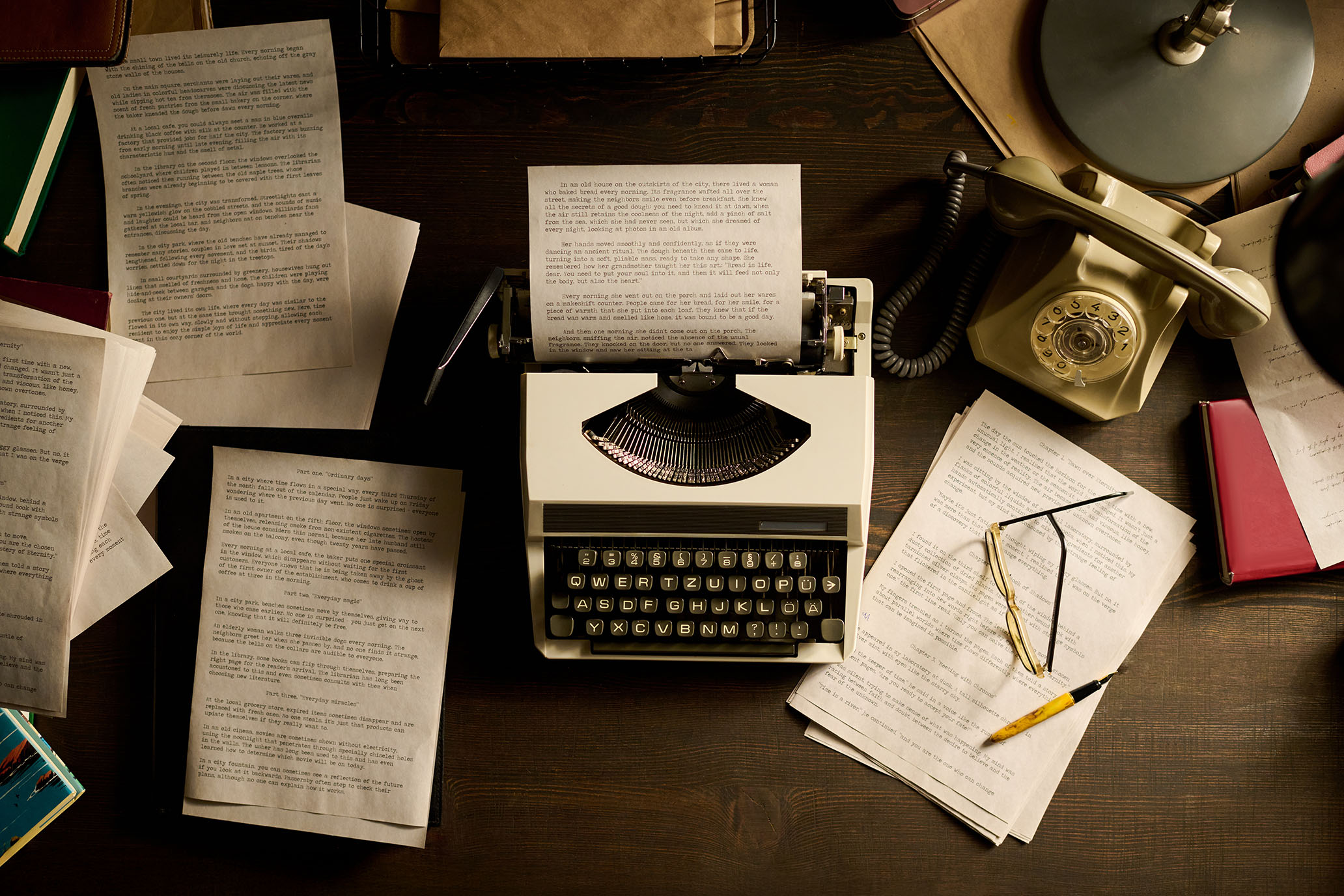
Some limitations apply to nearly every writer:
Baseline limitations
- Difficult editing
- No search
- Transferring work to a digital format
- Bulky hardware
- Noise
- Maintenance
- Paper, ink, ribbons, and correction tools
Others depend on the kind of writer you are. Some people work completely offline and are perfectly happy never syncing a file. Others rely on sync, backups, and digital organization as a core part of their process. For that second group, these become real limitations:
Limitations depending on your workflow
- No easy backups
- No sync
- No simple export
- No modern project organization
- No easy way to compile a manuscript
A traditional typewriter can be a beautiful drafting tool, but most writers eventually need their work in digital form. And in the modern age, these limitations ultimately shape a writer's entire workflow.
That is where the digital typewriter idea becomes useful.
How Modern Digital Typewriters Improve the Workflow
A good digital typewriter should preserve the best part of a traditional typewriter: focused drafting.
But it should also solve the old workflow problems.
A modern digital typewriter should ideally offer:
- Digital text storage
- A readable screen that is easy on the eyes
- A comfortable writing experience
- A focused interface
- Easy export or sync
- Portability
- Good battery life
- A practical way to continue editing elsewhere
- Enough simplicity to stay focused
- Enough flexibility to fit into a real writing workflow
The goal is not to recreate a typewriter exactly.
The goal is to keep the focus and ritual while making the rest of the writing process easier.
Where BYOK Fits
BYOK is a modern interpretation of the typewriter.
It is not trying to recreate a traditional typewriter exactly. It is trying to preserve the best part of the typewriter experience, focused drafting, while making the rest of the workflow modern and convenient.
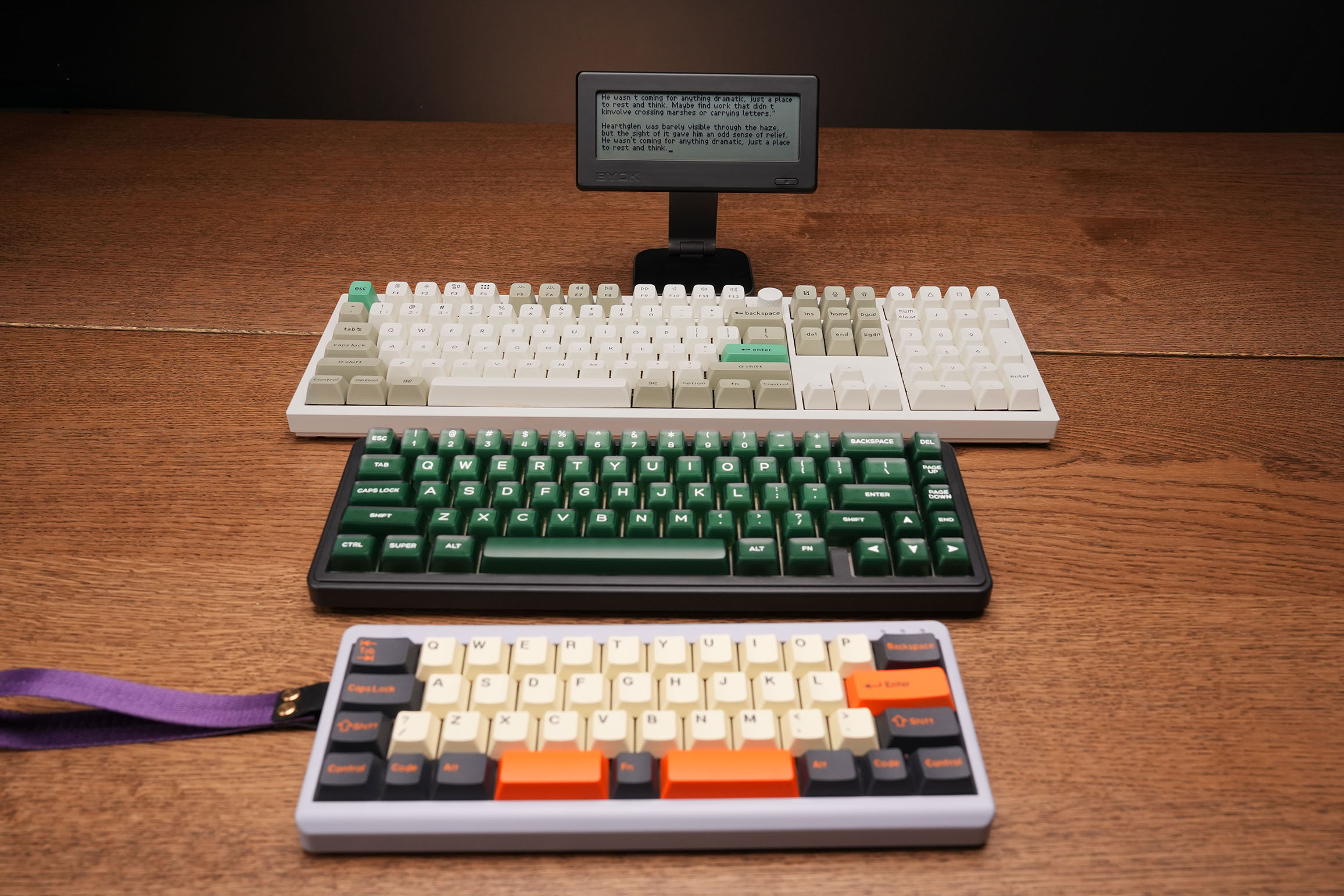
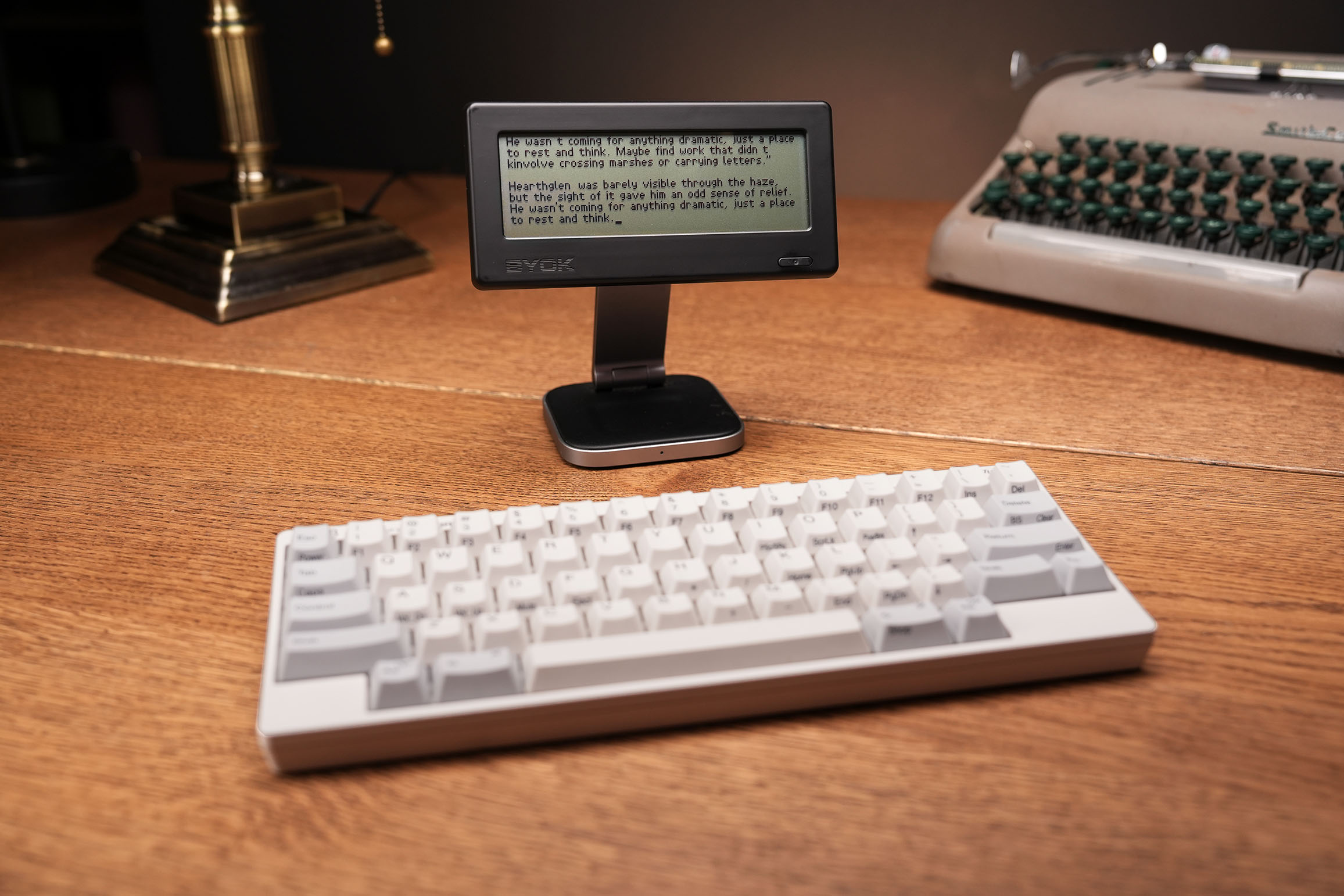
BYOK gives writers a dedicated writing device that is small, portable, and focused. It is slightly larger than a smartphone, and it works with the keyboard you choose.
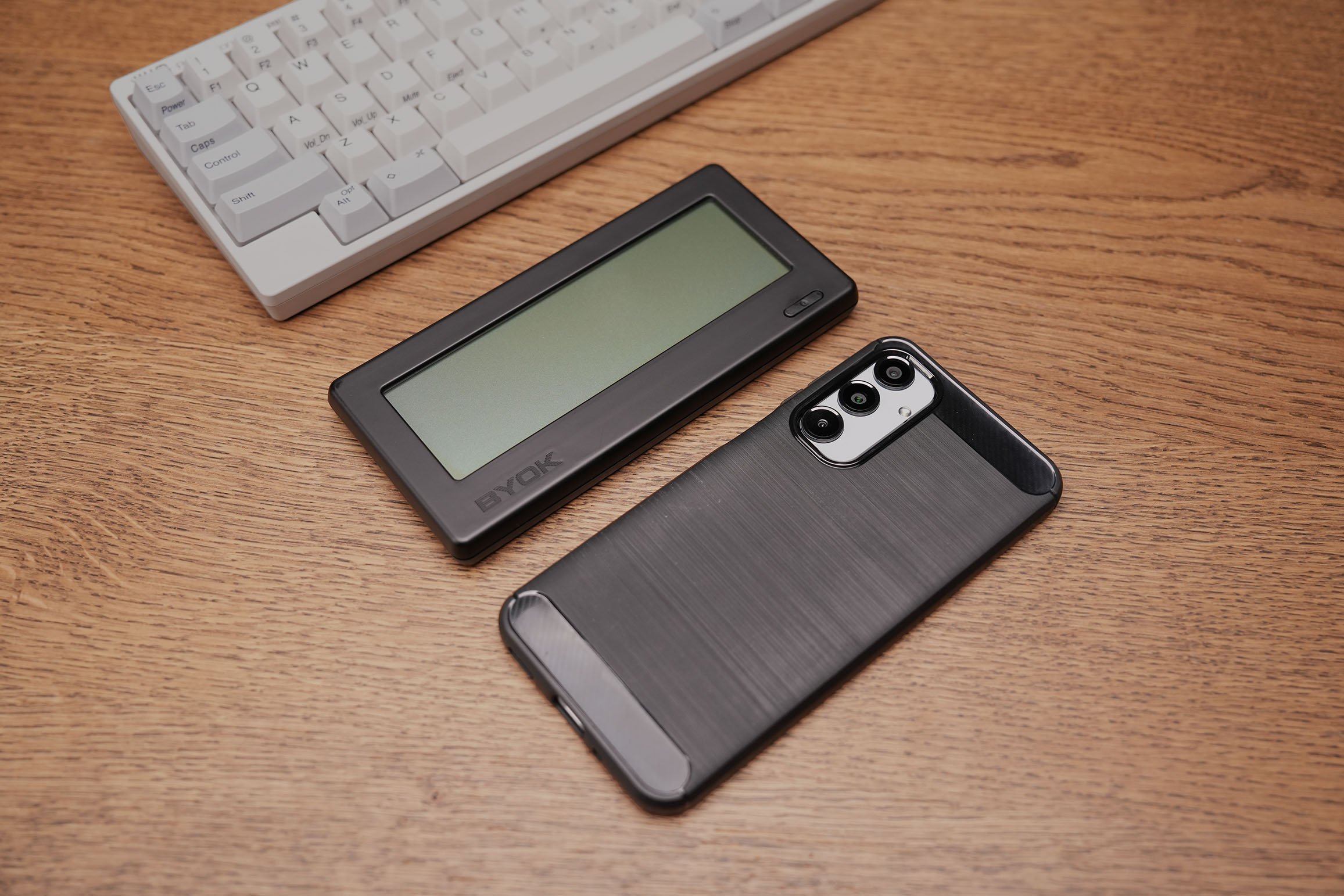
That keyboard choice matters just like the keys on a typewriter. Many digital typewriter-style devices lock you into one built-in keyboard. BYOK separates the screen from the keyboard, so you can use a compact travel keyboard, a full-size mechanical keyboard, or whatever setup fits your hands and writing style.
BYOK also connects to Studio, which gives writers a deeper writing environment when they want to organize, revise, arrange, and compile their work.
The device is for quiet drafting. Studio is for the larger writing workflow.
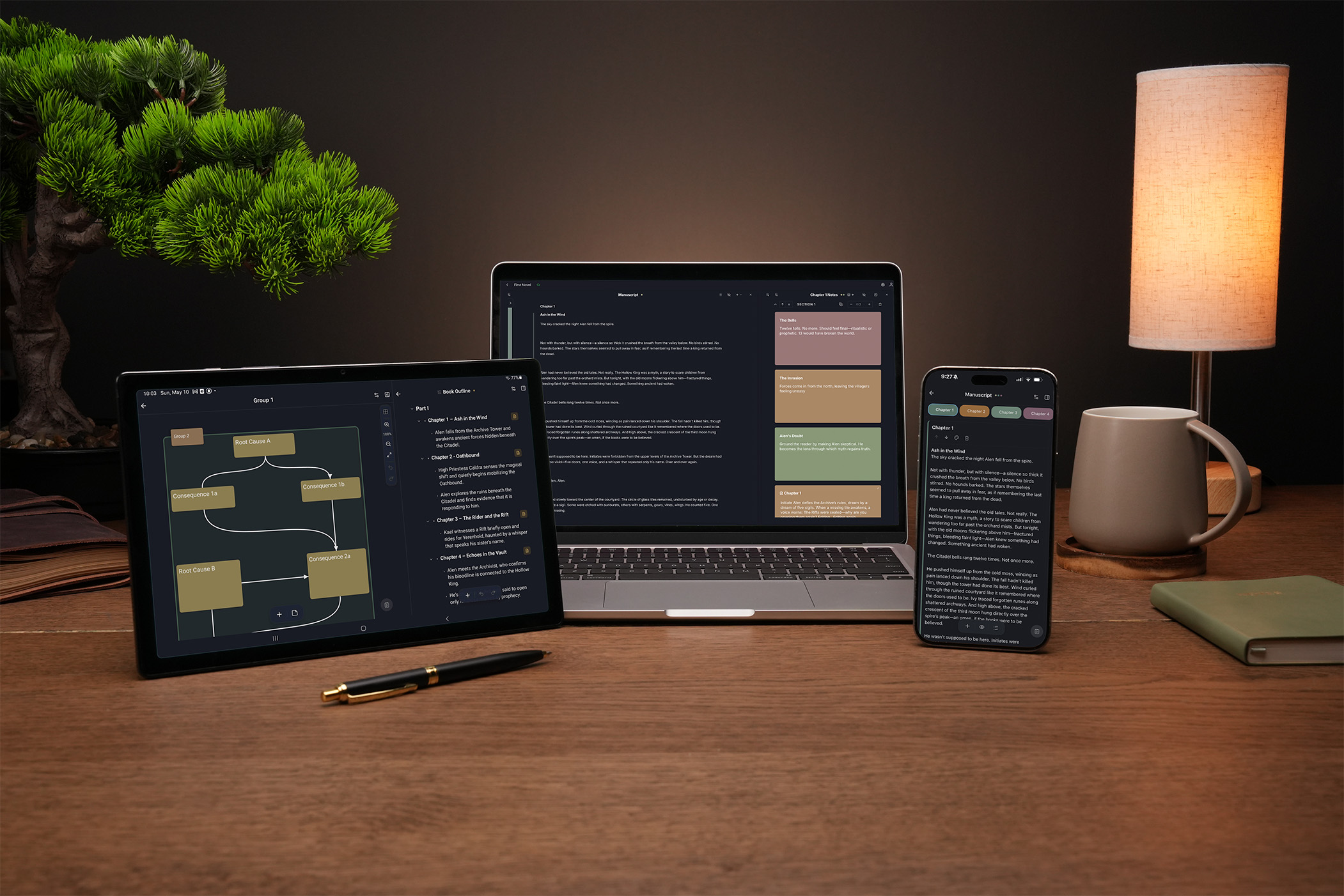
That combination makes BYOK feel less like a nostalgic gadget and more like a practical modern writing system.
BYOK is especially strong for writers who want:
- A focused drafting device
- A highly portable writing setup
- The freedom to use their own keyboard
- A lower-cost alternative to premium smart typewriters
- A writing workflow that can move beyond basic document storage
- A device that feels separate from a laptop without trapping the work on paper
Digital Typewriter vs Laptop
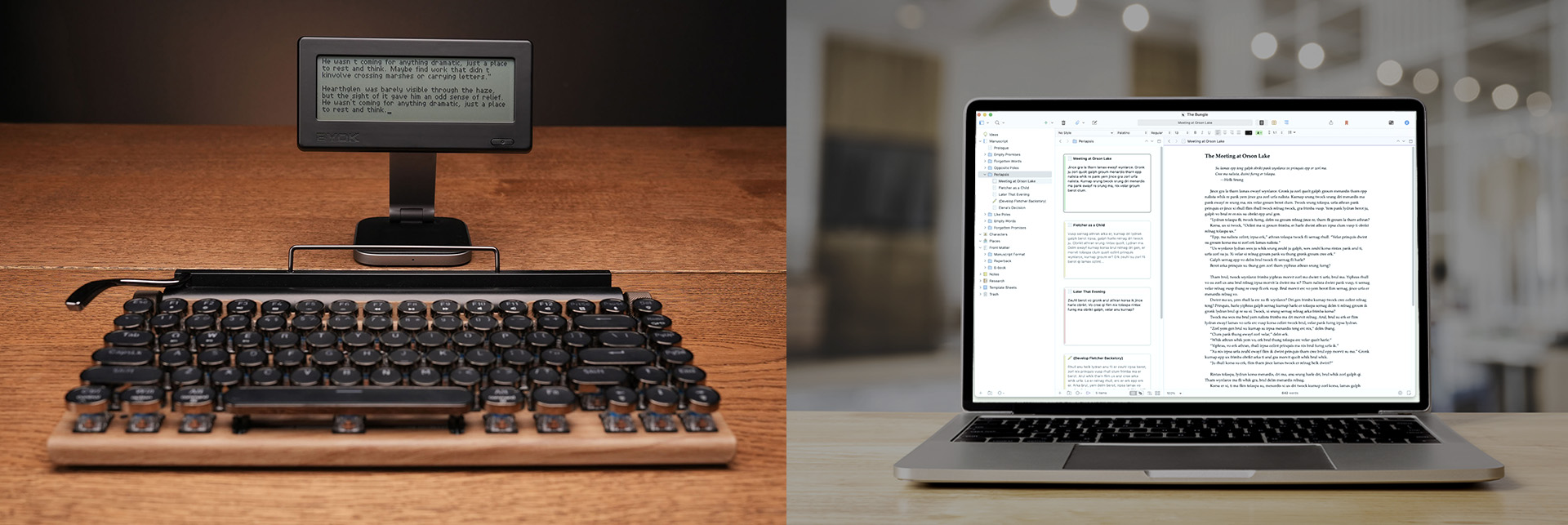
The most common question I see with regard to the BYOK is “Why not just use a laptop?”
A laptop is powerful, but that power is also the problem.
A laptop can run writing software, research tools, formatting tools, email, web browsers, social media, messaging apps, streaming services, and everything else. That makes it flexible, but it also makes it distracting and overwhelming for writers who truly just need to get the words down.
A digital typewriter is more limited on purpose and this ultimately leads to more productivity for many writers.
- Powerful software
- Easy editing
- Research
- Formatting
- Publishing tools
- File management
- Multitasking
- Tabs
- Notifications
- Apps
- Social media
- Work associations
- Easy distraction
- Less separation between drafting and everything else
- Focused drafting
- Physical separation from laptop work
- Fewer distractions
- Clear writing ritual
- Portable writing setup
- Simpler creative environment
- Less flexible than a full computer
- Not ideal for final formatting
- Not meant for research-heavy work
- Usually needs a second tool for deeper editing
The best workflow may not be digital typewriter or laptop. For many writers, it is both.
Draft on the focused device. Edit, organize, and publish elsewhere.
Digital Typewriter vs Traditional Typewriter
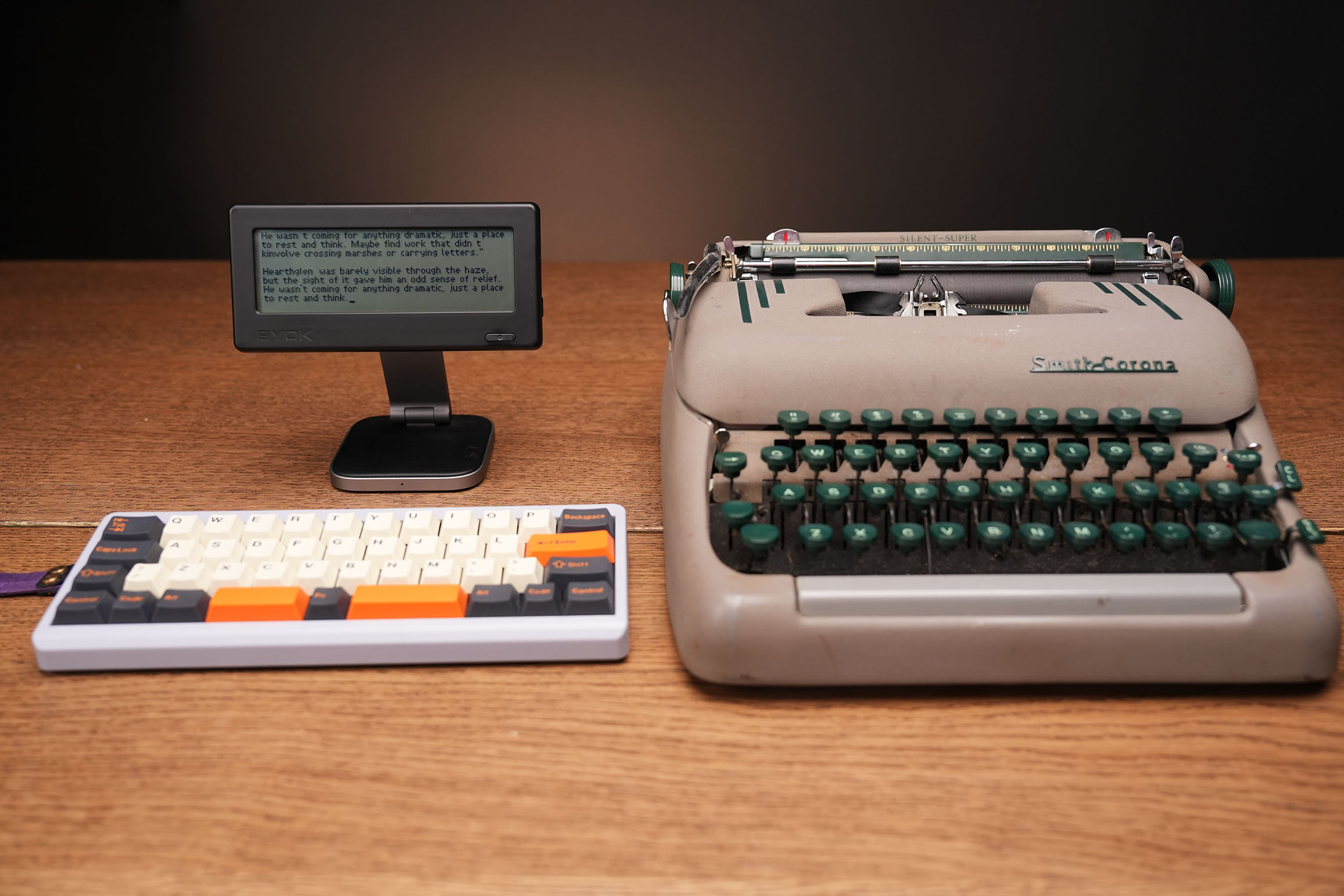
A traditional typewriter is the purest version of the focused writing idea. It is physical, tactile, and completely offline.
But a digital typewriter is usually more practical.
- Deep focus
- Physical writing ritual
- No internet
- No apps
- Tactile feel
- Beautiful analog experience
- Hard to revise
- No digital storage
- No easy backup
- No sync
- No simple export
- No modern project organization
- Bulky and noisy
- Requires paper, ribbon, and maintenance
- Focused writing
- Digital files
- Portable options
- Quiet drafting
- Easier export or sync
- Better fit for modern writing workflows
- Less romantic than a real typewriter
- Still electronic
- May not offer the same tactile feel unless paired with a good keyboard
A traditional typewriter is inspiring. A digital typewriter is usually more practical.
What to Look for in a Digital Typewriter
Not every digital typewriter device solves the same problems.
Before choosing one, consider what kind of writing setup you actually want.
Focused writing interface
The device should reduce distractions instead of recreating a laptop-like environment.
Comfortable keyboard or keyboard choice
Typing feel matters, especially for long writing sessions. Some writers want a built-in keyboard. Others may prefer the freedom to choose their own.
Comfortable screen
The screen should be easy on the eyes in a way that supports long writing sessions.
Portability
If you want to write away from your desk, size and weight matter.
Battery life
A good writing device should be easy to pick up and use without constant charging anxiety.
Export or sync
A digital typewriter should make it easy to get your work where it needs to go.
Workflow after drafting
Drafting is only one part of writing. If you are working on a larger project, you may eventually need notes, outlines, manuscript organization, editing, exporting, and more.
Reasonable price
Some digital typewriters are premium objects. That may be worth it for some writers, but many writers want the focus without spending as much as they would on a laptop (or more!).
Other Modern Digital Typewriter Options
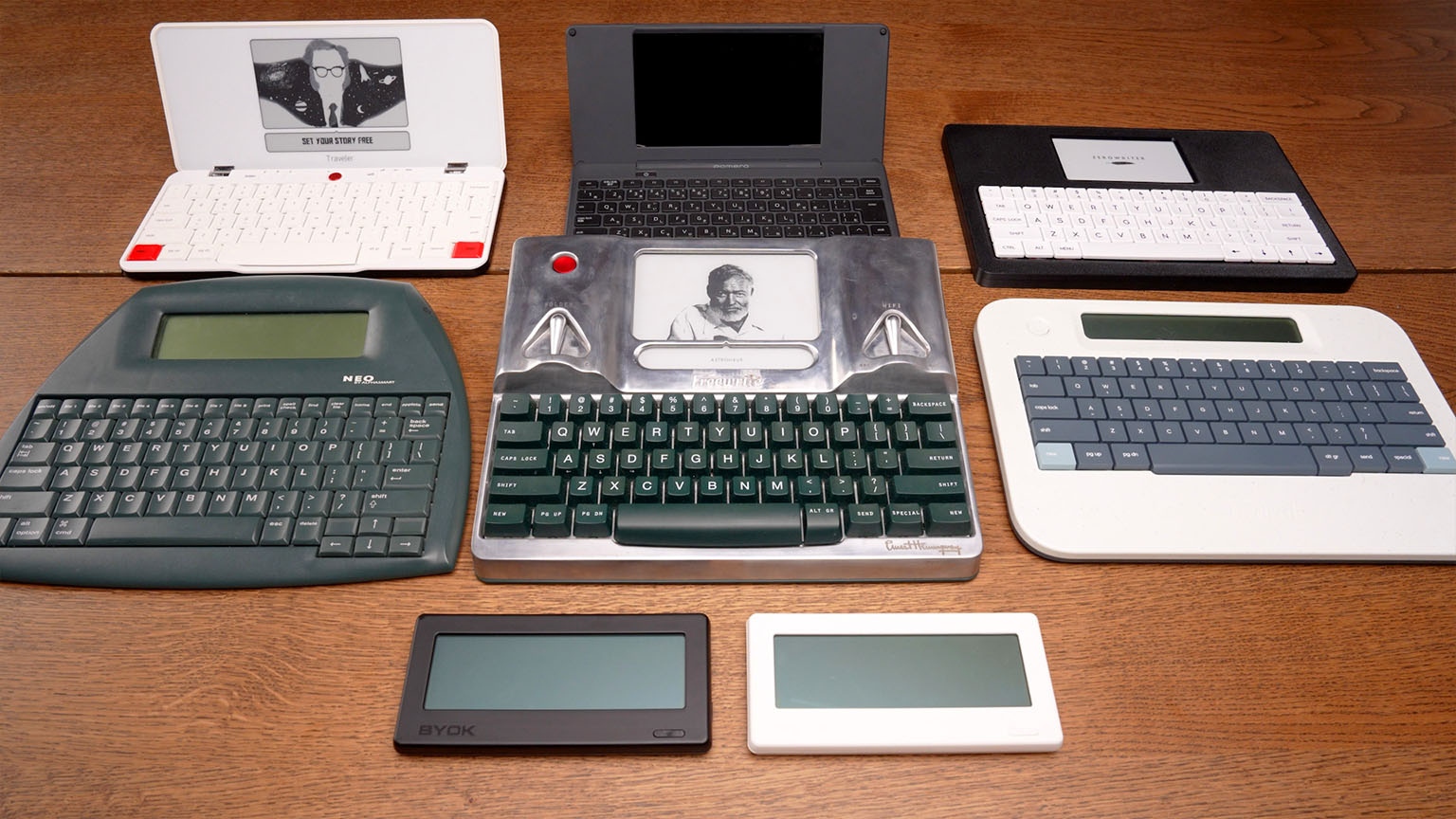
BYOK is one modern approach to the digital typewriter idea, but it is not the only option. Other devices in the broader category include the ones below. For full hands-on breakdowns, see our guide to the best distraction-free writing devices and our roundup of Freewrite alternatives.
Freewrite Smart Typewriter
A premium all-in-one E Ink drafting device with a built-in keyboard. Best for writers who want a more substantial desk-first smart typewriter.
Freewrite Traveler
A portable clamshell E Ink writing device. Best for writers who want a single-piece portable writing tool.
Freewrite Alpha
A lower-cost Freewrite device with an LCD display. Best for writers who want the Freewrite ecosystem at a lower price than the E Ink models.
Pomera DM250
A compact folding writing device with a larger LCD screen and a self-contained form factor.
AlphaSmart Neo
A discontinued classic writing device that still appeals to writers who want a cheap, simple, used drafting tool.
Zerowriter Ink
An E Ink writing device with a more bare-bones, less polished feel.
Final Recommendation
A traditional typewriter is focused, tactile, and inspiring, but it is not practical for most modern writing workflows.
A laptop is powerful and flexible, but it is often too distracting for focused drafting.
A digital typewriter sits between those two worlds. It gives writers a dedicated place to draft while keeping the work digital enough to edit, sync, export, and continue elsewhere.
BYOK is built around that modern digital typewriter idea. It keeps the focused drafting experience, adds portability and keyboard freedom, and connects to Studio for a deeper writing workflow when needed.
If you want something that feels like the spirit of a typewriter without the friction of paper, ink, and retyping, BYOK is one of the most practical modern options.
Want to write with fewer distractions?
Get practical writing workflow ideas, focused setup inspiration, and occasional updates from BYOK and Studio.